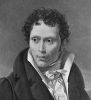
Yaroslavsky was born into a Jewish famity as Minei Israilevich Gubelman in Chita, Zabaykalsky Krai on March 3, 1878. He entered the Russian Social Democratic Workers Party in 1898 and organized communist cells on the Trans-Baikal (Zabaikalsky) Railroad). In 1901, he was a correspondent for the revolutionary newspaper "Iskra," and the following year became a member of the Party's Chita Committee. In 1903 he became a member of the St. Petersburg Committee of the Communist Party and became one of the leaders of the Military Wing of the party, siding with the Social Democrats' Bolshevik faction during the intraparty split.
Yaroslavsky took part in the 1905 Revolution and his wife, the revolutionary Olga Mikhailovna Genkina (1882–1905) was killed by a member of the Black Hundreds during the conflict. Yaroslavsky led communist activity in St. Petersburg, Yekaterinoslav, and Tampere (now in Finland) during the revolution and edited the paper "Kazarma". He was arrested in 1907 and sentenced to hard labor in the Gorny Zerentu Prison in the Nerchinsk region and later exiled to Eastern Siberia.
On September 15, 1921, Yaroslavsky was the prosecutor at the trial in Novonikolaevsk, now Novosibirsk, of the counter-revolutionary Lieutenant General Roman von Ungern-Sternberg.
With the outbreak of the German-Soviet War, the state reduced its anti-religious activities somewhat as the Russian Orthodox Church was seen as an institution that could be of use in rallying the population to defend the nation. The journals "Bezbozhnik" and "Antireligioznik" ceased publication and the League of the Militant Godless fell into obscurity (The official reason was the lack of newsprint, now needed for the war effort.[1]
[Links nur für registrierte Nutzer]
1927 erzwang Josef Stalin die Zusammenlegung bis dahin selbstständiger Bauern in Kolchosen: Dies sollte besonders die traditionell christlichen Kulaken treffen. In den folgenden Jahren wurden tausende Kirchen geschlossen, der Sonntag als Feiertag abgeschafft und viele einfache Bauern und ihre Dorfgeistlichen ermordet.
Zehn Jahre darauf ergab eine verordnete Volkszählung, dass sich immer noch ein hoher Anteil der Russen zum Christentum bekannte. Bis 1939 intensivierte der Staat daraufhin seine Umerziehungs-, Enteignungs- und Vernichtungsschritte. Wie viele Kleriker, Ordensleute und Laien diesen politischen Säuberungen zum Opfer fielen, ist unbekannt, da die Behörden Geistliche nicht von Regimegegnern unterschieden. Die orthodoxe Kirche gibt an, dass zwischen 1917 und 1940 allein 120.000 Priester, Mönche, Nonnen und kirchliche Mitarbeiter verhaftet wurden; davon wurden 96.000 erschossen. Ende der dreißiger Jahre war weniger als ein Dutzend Kirchen noch offiziell geöffnet.
Erst der Überfall des nationalsozialistischen Deutschland 1941 änderte diese Linie. Nun versuchte Stalin, den russischen Patriotismus für den Abwehrkrieg zu mobilisieren, und ging daher zu einer Duldung der Orthodoxie über: 1943 wurde das gesamtrussische Patriarchat wiederhergestellt, sogar Klöster durften neu errichtet werden. Andere kleinere Kirchen wurden weiterhin verfolgt.
[Links nur für registrierte Nutzer]
The main target of the anti-religious campaign in the 1920s and 1930s was the Russian Orthodox Church, which had the largest number of faithful. A very large segment of its clergy, and many of its believers, were shot or sent to labor camps. Theological schools were closed, and church publications were prohibited. In the period between 1927 and 1940, the number of Orthodox Churches in the Russian Republic fell from 29,584 to less than 500. Between 1917 and 1940, 130,000 Orthodox priests were arrested. The widespread persecution and internecine disputes within the church hierarchy lead to the seat of Patriarch of Moscow being vacant from 1925 to 1943.
After Nazi Germany's attack on the Soviet Union in 1941, Joseph Stalin revived the Russian Orthodox Church to intensify patriotic support for the war effort.
[Links nur für registrierte Nutzer]



 AW: Russland in Not
Zitat von Candymaker


 Mit Zitat antworten